
Keith Barrett – From self-doubt to clarity and true momentum
What happens when you stop believing stories that were never true?
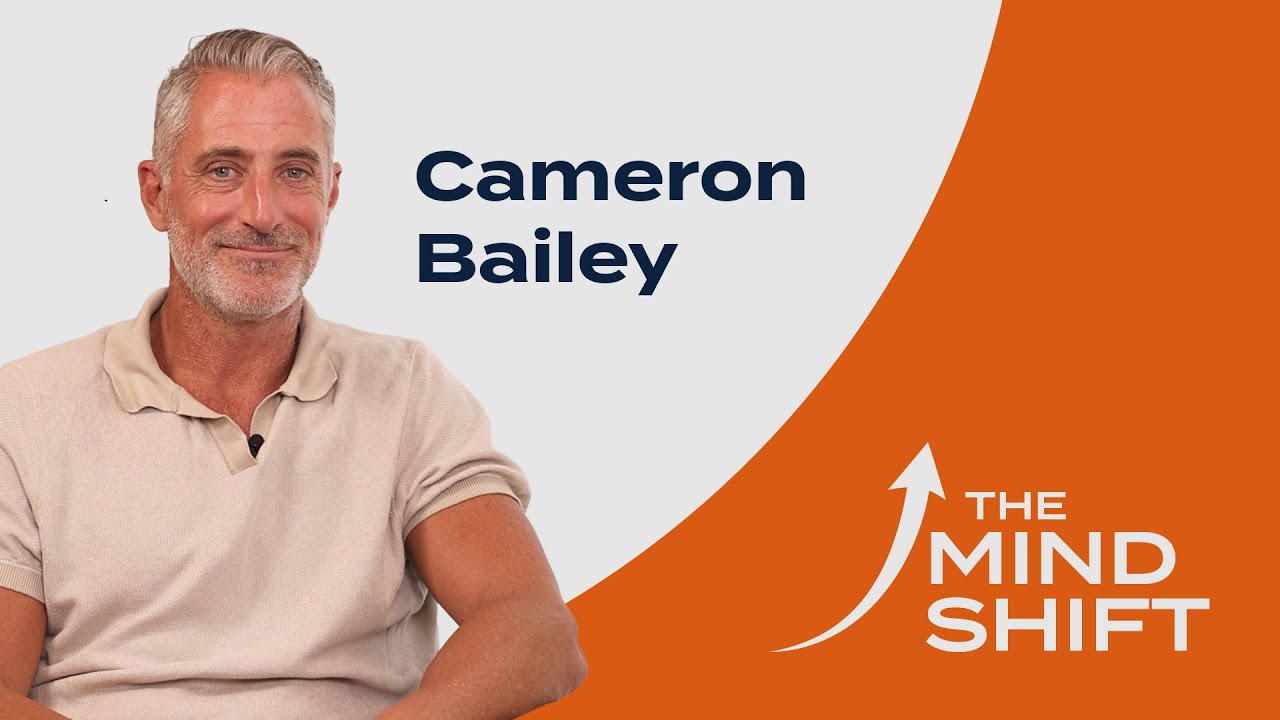
In this episode of The Mind Shift, Sridhar sits down with Keith Barrett, founder of Reverb, a strategic PR firm based in Australia. Keith has spent over 25 years in media and communications. His team created $1.1 billion of value for their clients in the past six months alone. They won Agency of the Year last June. CEOs ask him to call every Monday morning.
For most of that career, he was quietly waiting for someone to tell him he didn't belong.
Is it possible to be highly successful and still be your own biggest obstacle?
This episode explores what happens when the beliefs holding you back are the ones you can't see, and what becomes possible when you finally address them.
The beliefs you don't know you have
Imposter syndrome gets talked about a lot. What Keith describes in this episode goes underneath the surface of it.
He started his career as a journalist in the west of Ireland without a degree in English or communications. He became an editor. He moved to Australia, built a respected firm, and worked at the very top level of business. And through all of it, he quietly believed someone was going to tap him on the shoulder and tell him he shouldn't be in that seat.
The further he went in his career, the more he pushed that feeling down.
It never left.
These aren't beliefs you can easily name or address on your own. They're formed early. They run deep. They're invisible in the day-to-day. And as Sridhar explains in the episode, they dictate far more of your life than you realise.
The moment everything changed
When Keith first connected with Sridhar, it wasn't about strategy or motivation. He was dealing with a real business problem: a significant pivot that hadn't worked out, sunk costs, staff to pay, decisions to unwind.
But he knew what he didn't need.
He didn't need a five-step plan for the next financial year. He'd worked with business coaches before. He'd seen counsellors and psychologists. He knew an off-the-shelf solution wasn't going to cut it.
What he needed was someone who would go to the root of how he thought about himself. And not stop short of it.
Their first session wasn't about the business. It was about Keith tracing what he had come to believe about himself as a child, as a migrant, as someone without formal credentials working at the highest level. Taking it apart.
What he found: not only were those beliefs not true. They had never been true.
What changes when you change how you see yourself
For five years running, Keith was a finalist for Agency of the Year. For five years, he never once engaged with the award. He didn't contact the organisers. He didn't ask for anything. Eventually he emailed to ask to be taken off the list.
I'm always the bridesmaid. I'm never going to win. Just remove me.
Twelve months after starting to work with Sridhar, Reverb won the award.
The award didn't change. The work Keith was doing didn't change. What changed was whether he believed he had what it took, and what happened when he started acting from that different belief.
There's another example in this episode. Around 18 months ago, Keith facilitated a round table for seven CEOs on the key challenges facing the financial advice industry. He texted Sridhar on the train to Sydney to say he'd never felt so relaxed heading into something like that. The white paper from that three-hour conversation is still being referenced by businesses in London today. They want to replicate it.
Same expertise. A different frame of mind going in.
Success without the struggle
For six years, Keith ran a highly successful firm while carrying beliefs that weren't true. It worked, in a sense. But it cost more than it needed to.
As Sridhar puts it in this episode: we don't have to struggle to be successful.
The missing ingredient in most success frameworks isn't strategy or effort. It's the connection with yourself that's strong enough to let you actually use what you've got.
What Keith describes after doing this work isn't passive ease. It's the absence of fighting yourself at the same time as doing everything else. He has a longer time horizon. Short-term problems don't knock him off course. He plans from confidence rather than anxiety.
He's now looking at opening a London office. He's building a three-to-five year plan with operations around the world. Two years ago, he was trying to see to the end of the financial year.
The biggest takeaway
The beliefs that limit us most are often the ones we can't see.
They show up as imposter syndrome at the surface. But they run deeper than that. And addressing them, really addressing them rather than managing them, changes something that's hard to put into words.
As Keith describes it: once that switch is flicked, it's like turning on God Mode in a video game. Nothing phases you. Nothing feels impossible. Nothing stops you in your tracks.
That's not a metaphor for becoming bulletproof. It's a description of what it actually feels like to operate from a true belief in yourself, rather than in spite of a false one.
About Keith Barrett
Keith Barrett is the founder and director of Reverb, a strategic PR and communications firm based in Australia. With more than 25 years in media and communications, including two decades as a journalist and editor, Keith works at the executive level with listed companies, fintechs, financial services firms, and not-for-profits. He is based in Newcastle, New South Wales.
Listen now
If you've ever wondered:
- Why you keep getting in your own way despite being genuinely capable
- What it actually takes to stop carrying beliefs that are holding you back
- How the inner work translates into real business and life results
- What becomes possible on the other side of it
This conversation is for you.
Sridhar Krishnamurti: Hi everybody, and welcome to The Mind Shift. This is a podcast where we explore living a life without limits, with people who are dedicated to achieving exactly that. I'm Sridhar, your host, and my very special guest today is Keith Barrett. Keith, I've been really looking forward to this. There are always gems on this podcast, and when I think of you, I think of someone with a real gift. Sometimes we face real challenges, right? And you're such a testament to what happens when you have the courage to address them. What can happen in your life, how you can grow as a person — professionally and in every other way. We've been talking about this for a while, so thank you for being here.
Keith Barrett: My pleasure. Thanks for having me.
Sridhar Krishnamurti: A real pleasure. What we generally do on The Mind Shift is throw you in the deep end. I know you've been doing some dedicated work for a while now. Our listeners are all about living a life without limits and addressing whatever stands in the way of that. What's one thing you've learned and applied that you'd share with someone who wants to do the same?
Keith Barrett: The most important thing, in all the work we've done together, has been exploring and understanding the mechanisms that existed within myself — what I believed about myself up to a certain point in time. For a lot of people, this shows up as imposter syndrome. I had a collection of assumptions about myself that weren't immediately obvious. They were subconscious. They were the framing I put around myself, around my business, around what I aspired to achieve. I'd always wanted to unlock some of that thinking, which is ultimately how you and I ended up working together.
The first piece of work we did was breaking down and distilling what I believed about myself, understanding what was causing my limitations, and then working through them one by one. It built cumulatively from there. The long way of saying it is this: it's about understanding deeply who I am as a person, and dispelling the myths I believed about myself that turned out not to be true.
Sridhar Krishnamurti: That's a powerful start. What brought you to the place where you wanted to explore something like that? I know you were referred by a mutual friend who'd had his own experience here. But what made you start questioning in the first place?
Keith Barrett: As with many things, it was a moment of crisis that led me to look for help. But the runway to that existed long before. I've lived in five cities across three countries. I moved to Australia 21 years ago, and launched my business eight years ago. Across all of that time, I always wanted to expand my thinking and invest in myself. But particularly once I became a father and a business owner, it got harder and harder to find the time.
When we met, I was dealing with a specific business problem. I own a PR firm, and was an editor for 20 years. I'd been building the business on the assumption that I could grow the content side of my work significantly. It didn't pan out, but by that point I'd already invested a lot of money: I'd hired staff, opened an office, and all of that became redundant fairly quickly. I needed to recalibrate. When you realise you've made an error in your decision-making and need to unwind it, that weighs on you. That was the catalyst for us meeting, through a referral. And the work went straight into my state of mind around everything that was changing.
Sridhar Krishnamurti: I mentioned a gift earlier, and I knew things would unpack as we kept talking. You've got a tremendous gift in what you do, both in your editorial and PR work. And more recently, I've had the chance to see it as a father too. Getting to see you with your daughter was something else. That's what I mean by gift. A lot of people can relate to this: you've got something real, and yet there you are in one of the most difficult periods of your life. That's how it happens. And there are always two ways you can go. There are people who fold at that moment, who just say, well, that's it. And then there are people like you who just can't give up. That's what I saw when you first arrived: that sense of, I'm getting through this, I don't know how, but I am. What kept you going?
Keith Barrett: Bringing up family is interesting, because one of the byproducts of the work I've done on myself is gaining clarity around what actually matters most. As a small business owner, your priorities are obvious: sustain the business, find new clients, make sure your staff can pay their mortgages. Family life becomes secondary to all of that, which is almost an obligatory obsession when you're running a small business. But family is vitally important to me. My eldest left this morning on a three-day school excursion. She's 11, and it's her first time away for that long. I've been flat all morning and was looking forward to this conversation to get my blood going again.
But look, failure was never an option. We do pro bono work for not-for-profits who depend on us to amplify their message and help them secure funding. In the past six months, we've created $1.1 billion of value for our clients: a $500 million mandate from a US client, a $400 million acquisition, a $170 million mandate for a FinTech we work with. I carry that weight of responsibility very deeply. Shutting up shop because things were hard was never going to be an option.
Having moved around the world as a migrant, you build a certain capacity to face adversity. But there are times — and when we first met was one of them — where you absolutely need help. I knew there was a path forward, but you can't get out of that cycle on your own, not when you believe in your heart that you might not have what it takes. That requires dedication. It requires sitting with yourself and going through the process of unblocking those beliefs. It does take time. But the fruits of doing that have been immeasurable. My life has completely changed in almost every area: how I am with my family, supporting my wife while she launches her business, winning Agency of the Year last June. These were milestones that were difficult to imagine two years ago. But the moment we started making progress on breaking down those assumptions I'd made about myself, everything really changed.
It changes in a way that's hard to articulate. It's more that I think differently now. I have a longer time horizon. I don't get derailed by short-term challenges. I can plan with confidence, with an expanding vision of what my future looks like, because I know I have the capability to achieve it. Whereas before, it was just a rat race: find clients, send invoices, chase late payments, pay staff. You can't look that far into the future when you're stuck in that loop.
Sridhar Krishnamurti: Wow. There's a lot in that. When we started this podcast, I wanted conversations that aren't common — that go to places most people don't go. My mission has always been to help as many people as possible receive the gift I was given: which was waking up from the slumber I was in. I've been open about my drug addiction and the homelessness, and then realising that my mind — what I believed, what I thought — is what got me there. And once I was woken up to that, I realised it was the way out, too. That was the door into a new life. That's really why The Mind Shift got started.
So I want to go back to something you said, which was simple but incredibly powerful. You said: I asked for help. I hope everyone listening takes that in. How could you get where you want to go without asking for help? Can you say a bit more about that moment?
Keith Barrett: It was probably the most important decision I've made in the last five years. But there's some important context. I could have Googled "business help" and found five thousand coaches in Australia, and I never did, because I knew that wasn't what I needed. I didn't need someone to hand me a five-step plan for getting through the next financial year.
When our mutual contact told me about you and your approach — specifically how focused you are on finding the real breakthroughs — that was what I was looking for. I'd worked with business coaches before. I'd seen counsellors and psychologists for various things. I knew an off-the-shelf solution wasn't going to cut it. I needed someone who was going to hold my head under the water until I got where I needed to go. So yes, asking for help is the most important first step. But understanding what kind of help you actually need matters just as much. If you know there are deeper beliefs you want to unpack, a $109-a-month online programme isn't going to get you there.
Sridhar Krishnamurti: It's like a roller coaster. But as you keep talking, more keeps coming out, and I appreciate you going there. You mentioned the word "ruthless" earlier. I'm not quite sure how to feel about being called that, but you're not the first person on this podcast to use it...
Keith Barrett: I won't get any more granular about it. But if you want me to —
Sridhar Krishnamurti: That won't be necessary. What I'd say is this: having been on the other side of suffering myself, I know it's unnecessary. So when I see it, I take a stand. You don't have to suffer. I don't care what you think you're going through — you just don't. That's the stand I hold. Sometimes minds haven't learned that yet. They want to buy back into the old patterns. And that's where it can look like ruthlessness from the outside. But what's on the other side of suffering? What's on the other side of the struggle, of that imposter syndrome? You're living that answer right now. Agency of the Year. And I'm giving you dad of the year after what I witnessed with your daughter.
What I want to acknowledge is that you brought openness and courage from the very beginning. You showed up ready to go. Some of what we explored was quite confronting, quite different from normal conversation. But you never backed away. That's what has allowed you to get where you are. You stayed open and courageous all the way through, not just at the start.
Keith Barrett: I want to make sure the "ruthlessness" isn't misread as inconsiderate or lacking compassion. I know what kind of person I am. I'm headstrong. Running a newsroom, working to eight different deadlines every week — copy deadlines, print deadlines, proof checks — you rule with an iron rod. I knew going in that I needed someone who was going to drive me, because I knew I'd be battling against myself much of the way. Once we had that momentum, things have just continued to evolve for the better. I see it daily in small things that I know wouldn't have happened two years ago, had I not been open to understanding what I was actually capable of. I'm very thankful for that.
Sridhar Krishnamurti: I just see who you are. When people come through, I see through the challenges to the person underneath. I don't speak to stories. I don't speak to identities. I keep speaking to the true person. And those with courage feel that. That's what happened with you. You kept stepping in. And one day you go, oh — that's who I really am. That's who I've always been. You were always that person. You were just going through a really difficult time, and those stories — that imposter — were loud.
So I'd love to hear, in your own words: how did you get from that level of challenge to two years later saying everything in my life has changed?
Keith Barrett: Everyone listening will know they hold beliefs about themselves — certain areas they see as strengths, others as weaknesses. Those are the surface-level suppositions. But deeper than that, there are beliefs that aren't visible. They run really deep, and they're what actually dictate the life you have.
The work you and I did went there immediately. Not to the business challenges, the restructuring, the headcount — straight into the work on myself. Who I was, and what the foundation was that everything else was built on.
A bit of background: I started as a journalist in the west of Ireland in the late nineties and became an editor. But I never had a degree in English or communications. My entire professional life, I always felt like someone was going to tap me on the shoulder and say, you shouldn't be in that seat. The further I went in my career, the more I pushed that feeling down. But it never left.
Even knowing those limiting beliefs were there, I had no way of addressing them. I didn't know how deep they went. The first major piece of work we did was understanding what I believed about myself, tracing it back to things that had formed when I was a child. Taking that apart.
I want to say: it was a difficult process. We dug into exact moments in time. I can remember sitting there with clammy hands while we pushed a little further in. But the upside was immediate. In the same session, things were being surfaced about the way I saw myself, and you were saying: not only is that not true, it's never been true. The epiphanies happened in real time — in both small and large ways. They just kept tumbling together and building into a wave that hasn't stopped since.
The parameters of our work have changed from two years ago, but I'm still engaged because when you start understanding yourself better, you unlock more awareness. My brain processes information differently now. I process things differently. And that's why we're still going.
Sridhar Krishnamurti: One of my teachers once said: the only way out is through. You just described exactly that. You went in, you got it, and yes, it was hard to look at. But you also said something important: how long did it actually take to reach the other side of something that had been running your life?
Keith Barrett: I can give you a really concrete example of how the mind shift came into effect. I won Agency of the Year last June, which is great. But I'd been a finalist for five years in a row and had never once engaged with the award — hadn't connected with the organisers, hadn't asked anyone for anything. I was added to the list because the editorial team at the publisher said they couldn't have an Agency of the Year category without Reverb on it. But eventually, I emailed them and asked to be taken off. I said, I'm always the bridesmaid, I'm never going to win, just remove me.
Then you and I started working together. Twelve months later, we won the award.
Five years of being in that ecosystem without engaging, because I didn't believe I had what it took. Then the work changed that.
Sridhar Krishnamurti: Because you were always good enough. You were always good enough for them to put you on that list. That's how we block our own progress. We literally stop ourselves from winning because we're not a match for it — we're not showing up for it. The moment you did, it was there waiting for you.
Keith Barrett: There's another example I think about. About 18 months ago, I facilitated a round table — seven CEOs around the table. That kind of situation would have caused me tremendous anxiety before. I remember texting you on the train to Sydney to say: I've never been this relaxed. But the difference wasn't just how I felt. It was what I produced.
We had a three-hour conversation on seven key challenges facing financial advice over the next seven years. The white paper we created from that workshop — businesses in London have since contacted my client to find out where those ideas came from. They'd never seen anything like it. They want to replicate it in London.
I went into that room with a different view of myself. The goal wasn't just to get through three hours without choking. It was to engineer the most progressive conversation on that topic the industry had seen. And it's 18 months later, and that business is still drawing on what we created. That single three-hour event, with me in a different frame of mind, produced a vastly different outcome than would have occurred if I'd walked in full of self-doubt.
Sridhar Krishnamurti: I remember getting that text. We'd done some work around what you were nervous about, what you were believing, and you shifted it. And then the text afterward — not just "I got through it" but something genuinely extraordinary had come out of it. Still being talked about today.
If you stop and think about the other trajectory: you show up nervous, just trying to survive the room. Maybe you don't get asked again. Maybe nothing meaningful comes out of it. Instead, an entire industry is still drawing on something you created. Just by letting go of something that wasn't true in the first place.
Sridhar Krishnamurti: You're quite a humble guy, Keith, and I appreciate you sharing this. But the truth is you're really successful, genuinely excellent at what you do. And it's coming through here. When something like that occurs, think about the contribution to an entire industry, just by addressing one belief that was never true. This is why we do this podcast. This is why I show up every day.
Keith Barrett: It's a sliding doors moment, right? I could have gone to a local business coach here in Newcastle, come up with a debt consolidation plan, got out of my office lease, and moved on. But that's not what happened. I had a clear sense of what I wanted. And our mutual contact had told me about your approach — that focused pursuit of the real breakthroughs. That's what I was after.
I've had my business for eight years. Two of those have been working with you. The other six, I ran it without that clarity, carrying all that baggage and those beliefs. And what's interesting is that I've always worked at the absolute top tier — CEOs of listed companies, fintechs, banks. I'm not producing social media copy for a marketing department. I'm reviewing five-year bank strategy documents and suggesting adjustments. And I've often found myself wondering: how did I do it for six years thinking I shouldn't have been at the table?
I have a CEO in Melbourne who says he wants me to ring him every Monday morning, because every time he interacts with me he comes away full of positivity and great energy. And I think back to two years ago — where was that Keith? He was always here. He just believed some things about himself that got in the way.
Sridhar Krishnamurti: That's so important. And when you're inside those stories, everything is harder. You were always good enough. You made it through six years on dedication and hard work and drive. And those were the things being touted as the path — be driven, work harder, push through. But I looked around and just saw people struggling. I didn't see a lot of happy people.
After my years on the street, I wanted to be happy. I didn't just want to be stressed out. I went that route early on, working hard, and thought: but I'm not happy. None of this is making me happy. And I'm thankful there was something in me that wanted fulfilment — that wanted to actually love my life.
People contact me and say, can you help me work harder? And I say, I'm not your guy for that. But if you want to be more successful and have an easier time, yes. Because here's the thing: we don't have to struggle to be successful. Once you understand who you are, success comes. And it's easier. You're more in flow. You show up to that round table and you're just you. You don't have to grind. You just need to be yourself, without those things in the way.
I've seen it time after time — people become so much more successful when they stop believing the stories that make them feel like they have to push so hard. They get inspired. They get mission-focused. You're a mission-focused guy. You've got great things you're committed to. How much more enjoyable is it to do that from a place of ease, rather than dragging yourself to the end of every day feeling like you're about to fall apart?
Keith Barrett: There are two parts to that. The first is the obvious upside: better clarity, better decisions, the ability to create the life you want. But there's also something in having actually shed those beliefs — in having gone through that metamorphosis from pre-work Keith to post-work Keith. That's its own motivator. The sense of, I went through that process, I understand better who I am, what I can do, what I want, what's important to me. All of that coming into clarity at once.
I think it's the latter that sustains the former. I feel like I'm riding a wave. Having unlocked this version of myself, I want to keep going. I want to keep exploring: where are the beliefs I'm still holding that are limiting me? Is it around family? My future? That sense of achievement, coupled with the obvious ability to live a better life — that's what keeps me engaged.
Sridhar Krishnamurti: You've mentioned business plans and business coaches a few times, and I want to address that. You can have all the business plans in the world. But it's the people executing them. If you're a business owner who feels like an imposter, you're the one trying to run that plan — and the plan alone isn't going to get you through. That's what you're bringing to light here.
My very first mission statement was to help people awaken to the truth of who they are and fulfil their maximum potential. Over time, I adjusted that — "potential" is a bit loaded. Now it's: to help people awaken and connect with who they truly are, and live the greatest version of their life. Same intent, clearer language.
And I'll share something I don't usually say publicly, but you're drawing it out of me. I work with a lot of highly successful people. And I've had some of them say that the internal connection they've gained from this work is worth more to them than any external success. Some have said they'd give the success away for that internal connection, because they know with that connection, they'll just create the success anyway. That's the missing link in all the "drive harder, work harder" messaging. It's the connection with yourself — so strong it can do anything.
Keith Barrett: Absolutely. It's the difference between: head down, panic all around, no idea where the future lies — versus knowing that even if my business went through everything it went through two years ago, I'd have no fear. As long as my team are looked after, as long as I'm happy and my family is happy, everything is going to be fine.
Knowing yourself means knowing you can achieve things, and knowing you can survive hardship. And that doesn't belong to the business I own now or any business in the future. It belongs to who I am. It persists.
Every part of my life has changed from dispelling those illegitimate beliefs. The personal gain from having a better understanding of who I am and what drives me outweighs any amount of money on an invoice, for sure.
Sridhar Krishnamurti: Based on 30 years of doing this work, here's what I'd say: it's highly likely you never go through those same contortions again. Because you don't need them. You've taken what they had to offer. You've connected with yourself. You know who you are. You're operating on a different plane now, Keith. That's what's clear from this conversation. And why would you go back? I don't see it happening.
Keith Barrett: I see the opposite. We're looking at potentially opening a London office, so I can spend more time in Europe closer to family. When I think back to two years ago, seeing to the end of the financial year was difficult. Now I'm looking at a three-to-five-year plan that involves offices around the world. The future is bright.
Sridhar Krishnamurti: This is just wonderful, Keith. My dream is that people know who they are — that they know they're unlimited and can create the lives they want. Coming in and sharing this honestly, this is exactly what this podcast is here for. That transformation happening in you, because of your courage, your honesty, your refusal to give up. You didn't just get through it. You used it as an opportunity to change your life entirely.
We always close with one question. If someone's listening and they're at the very beginning — they want to get on their path to living a life without limits — what would you say to them? What's the first step?
Keith Barrett: The most important first thing is to accept that you will hold beliefs about yourself that you don't know you have. They often show up at a surface level as imposter syndrome, but they run much deeper than that. So the first thing is to accept that there are things about yourself you can discover, if you're asked the right questions and go through the right process.
Go into that with an understanding of what's possible on the other side. Dispelling those self-belief myths can be really profound. Deep conversations will happen — with yourself and with whoever is facilitating that for you. But every part of it is valuable. And when it all comes together, the impact can be profound. You can change 40 years of thinking in a fairly short period of time. Once that switch is flicked, it's like turning on God Mode in a video game: nothing is going to phase you, nothing feels impossible, nothing will stop you in your tracks.
That's a very powerful place to be — as an individual, as a family member, as an employer, as someone who participates in their community. Going into all of those parts of your life with a belief in yourself that is rooted in truth, rather than in old stories, is a world apart from anything else.
Sridhar Krishnamurti: Connect with who you are, and realise it's okay where you're at right now. Keith, this has been really powerful. Thank you for being here, for sharing, and for your courage — not just today in opening up, but in who you've been throughout all of this. You're an example. You may not think of yourself that way. But how many people go through what you went through and let it take them out? Become bitter? You're the one who faced it, said I'm going to get through this, and used it. That's something special.
Thank you, genuinely, for being on The Mind Shift.
Keith Barrett: Thank you for having me, Sridhar. I think this entire conversation is a ringing endorsement of your approach and the work you do. I'm grateful for the insight and wisdom, and for having help to understand better who I am. It really is the gift that keeps giving. Long may it continue.
Sridhar Krishnamurti: Thanks, Keith. And thanks everyone for watching this episode of The Mind Shift. I'll see you on the next one.
Other episodes you may like
.jpg)

Stop settling. Start living without limits.
Every day you stay stuck is another day you're not living the life you're capable of. The Mind Shift process has helped thousands of people break through their plateau. You could be next.